
Often when I consult with clients I find that the wrong type of gravel has been used for a particular purpose. Different types of gravel and small rock can be used for pathways, drainage, decoration and even as mulch. Clients often ask me why is their pathway gravel all over the place. Also, it is getting stuck in their shoes and getting in the house.

This is pea gravel. It is pretty, yes? Because it is round it moves all over and doesn’t stay put or pack tight for walking. It is best for decorative purposes and drainage under pots or a sculpture set on level ground.

This is river cobble. It is used for drainage and decorative purposes as with pea gravel. It comes in many sizes. Large river cobble is often used in water features to reduce maintenance. Again, it is not for walking.
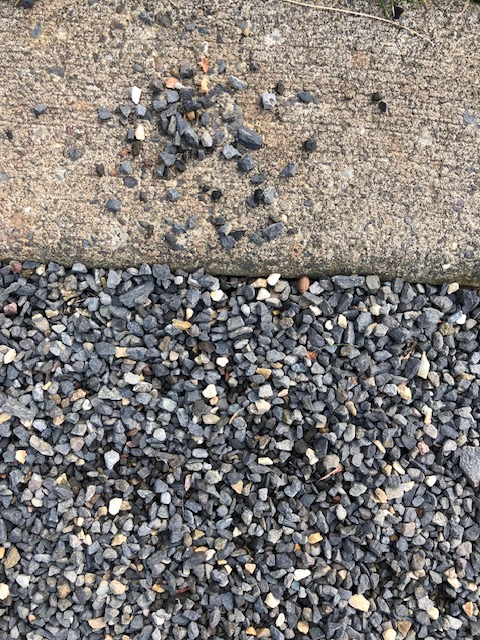
This is quarter ten gravel. It is screened and clean with no fine pieces. It makes a great mulch in place of the standard bark mulch. It looks best with Mediterranean or Contemporary gardens. I use it in flat parking strips with succulents.
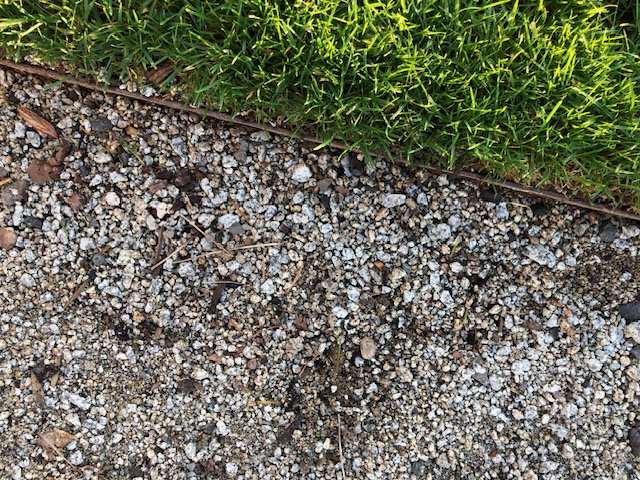
This is a pathway of decomposed granite with steel edging. Pathway gravel requires edging to hold it in place. It is also best compacted in layers so it packs tight for ease of walking. Granite gravel has a Mediterranean, California, Southwest or Modern feel and works with those types of gardens. It works with Japanese gravel gardens. The drawbacks are that It is not locally sourced, and it tends to grow moss and need some upkeep and replenishing.

This is a quarter minus gravel path with steel edging. This locally sourced gravel is composed of 1/4 inch gravel pieces and smaller to fill in the gaps and pack tight. It is the most frequently used path material here in the Northwest. For the best results each layer should be compacted as it is laid to a depth of 3 to 4 inches. It works with all garden styles. It can be easily refreshed by obtaining 5 gallon buckets at the local rock yard.
 Donna Giguere Landscape Design