Featured

Heat Tolerant Plants of the Pacific Northwest

Landscape designers have a new concern, as do gardening gurus and nurserymen:  understanding the heat tolerance of our native and cultivated plants. This past summer was a pressure cooker, not only for drought but also for a week of intense temperatures. This affected people, plants and animals. Plants help to cool the planet, yet in an ever-changing climate, what plant goes where? A landscape designer with a strong knowledge of plant and tree temperature tolerance can help assure you of a successful outdoor habitat.

 Some of the old rules apply when specifying and selecting plants for drought and heat, but not all of them, such as “the larger the leaf, the less sun and heat a plant can tolerate”. We still need to pay attention to the micro-climate from the urban heat of asphalt and concrete to the surrounding tree canopy. Intense heat can be hard on many plants even when adequately watered. Also, overly wet roots can be damaging for many plants especially conifers-when heat is intense their water uptake often shuts down.

Fleshy leaves, such as sedums and agaves tend to store more water in their cells. A plant such as a large leaved Rhododendron or a Camellia japonica may have thick leaves but they are not fleshy—they took a real hit last summer, especially if their micro-climate was baking. They also appreciate water. For trees, deep water is the best way to prepare for hot weather, especially during drought. Yet, depending on their micro-climate, even though deciduous tree leaves can burn in extreme heat and leave an undesirable specimen– rest assured, if they are well established, most of them should leaf out in the spring, that is, if they were watered deeply.

In general, heat tolerant plants thriving in a sunny location have very small leaves or are fleshy, but not always.  Some are very drought tolerant and others are not. Established plants fair better. Also, many of these plants are hummingbird and bee magnets.

Heat Tolerant Plants and Trees:

Agave varieties

Blue fescue grass-Festucca glauca (water a bit)

California lilac-Ceanothus varieties, both large and groundcover type, native and non-native.

Coyote bush-Baccharis-native to southwestern Oregon

Douglas Fir-Pseudotsuga menziesii

Dogwood tree-Cornus tree varieties (water deep)

Epilobium (Zauchineria)- california fuchsia varieties, native and non-native

Heath-Erica (also known as heather-water a bit)

Heather-Calluna (water a bit)

Hens and Chicks-Sempervirens

Huckleberry, evergreen-Vaccinium ovatum (native and in the shade)

Lavender cotton-Santolina varieties

Japanese false Camellia-Stewartia (water deep)

Kaminski milkwort-Polygala c. ‘Kaminski’ (water a bit)

Lavenders-Lavendula varieties

Manzanita-Arctostaphylos varieties, both large and the ground cover kinnickinnick, native and non-native. These appreciate good drainage, planted in a quarter-ten gravel/soil mix.

Oak-Quercus Northwest natives (water deep)

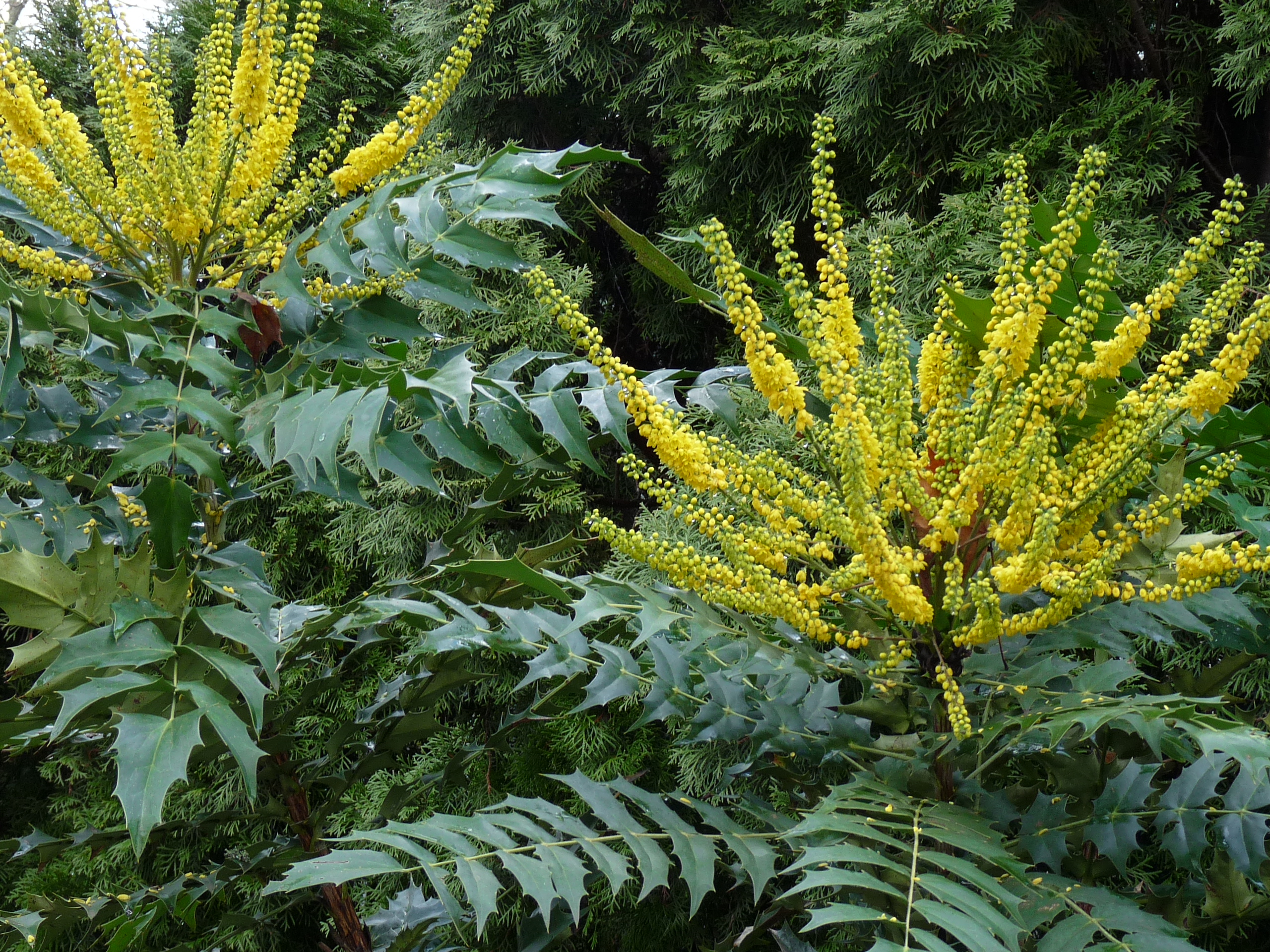
Oregon grape (The tall one)-Mahonia (native and in the shade)

Pine-Pinus, especially Northwest native pines such as lodgepole (contorta) and Ponderosa

Red hot poker-Kniphophia varieties

Rockrose-Cistus varieties

Rosmary-Rosemarinus varieties, large and small

Russian sage-Perovskia varieties

Sedum varieties

Smoke tree-Cotinus varieties

Snowberry-Syphorocarpus alba (native and in the shade)

Strawberry tree-Arbutus unedo varieties

Sunrose-Helianthemum (water a bit)

Juniper-Juniperus varieties, all trees and shrubs

Yucca varieties

  • In addition, roses and peonies seem to be an exception to the rule—they survive and bloom even with burnt leaves. Hydrangeas and deciduous blueberries cooked and many ferns, native and non-native took a hit. Native sword fern, in the shade performed fairly well.

Gravel Types for Landscape Purposes

Often when I consult with clients I find that the wrong type of gravel has been used for a particular purpose. Different types of gravel and small rock can be used for pathways, drainage, decoration and even as mulch. Clients often ask me why is their pathway gravel all over the place. Also, it is getting stuck in their shoes and getting in the house.

This is pea gravel. It's pretty yes but because it is round, it rolls all over. Keep it in a flat confined place as decoration only, perhaps under a set of pots or a sculpture.

This is river cobble. It is used for drainage and decorative purposes as with pea gravel. It comes in many sizes. Large river cobble is often used in water features to reduce maintenance. Again, it is not for walking.

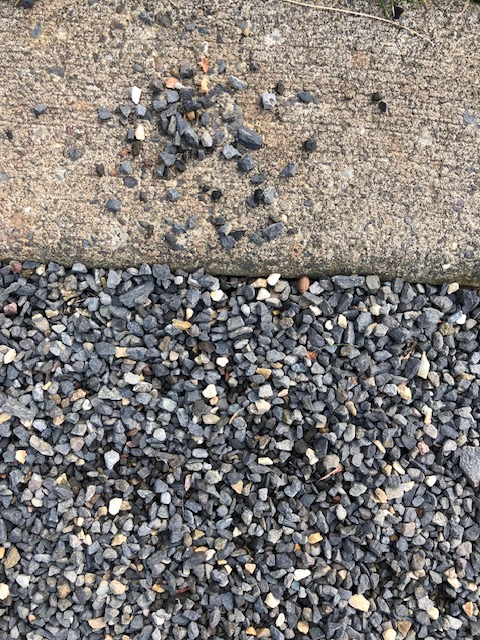
This is quarter ten gravel. It is screened and clean with no fine pieces. It makes a great mulch in place of the standard bark mulch. It looks best with Mediterranean or Contemporary gardens. I use it in flat parking strips with succulents.

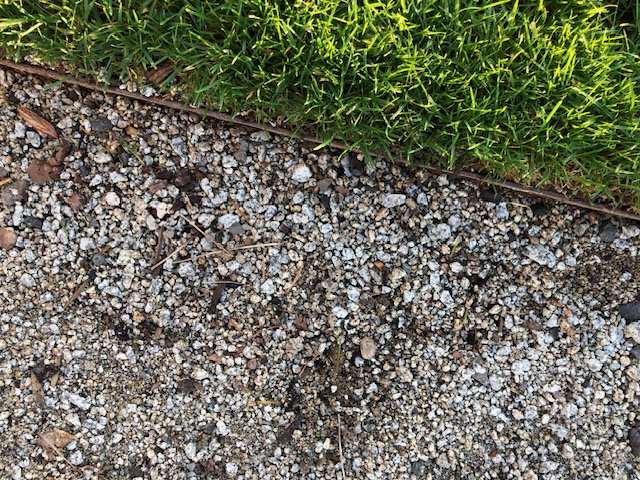
This is a pathway of decomposed granite with steel edging. Pathway gravel requires edging to hold it in place. It is also best compacted in layers so it packs tight for ease of walking. Granite gravel has a Mediterranean, California, Southwest or Modern feel and works with those types of gardens. It works with Japanese gravel gardens. The drawbacks are that It is not locally sourced, and it tends to grow moss and need some upkeep and replenishing.

This is a quarter minus gravel path with steel edging. This locally sourced gravel is composed of 1/4 inch gravel pieces and smaller to fill in the gaps and pack tight. It is the most frequently used path material here in the Northwest. For the best results each layer should be compacted as it is laid to a depth of 3 to 4 inches. It works with all garden styles. It can be easily refreshed by obtaining 5 gallon buckets at the local rock yard.

Climate Change and the Garden

  With the prediction of an El Nino in 2024 who would have guessed that an “arctic blast” was coming to the Northwest? After the so-called “heat dome” of 2021 followed by a few relatively normal, but hot summers, we now have made it through an ice-laden early January in 2024. It got down to 13 degrees at my place and that’s without the wind chill! We need plants that are climate resilient and we humanoids also need to be resilient and forgiving. Most frequently I tell my clients that our plants, native or not, are good to 20 degrees and if there is a nice cozy cover of insulating snow, perhaps down to 15- 18 degrees. Some winters plants do not even freeze back here–are they perennials or not by definition? Are they dead or dormant? It’s all very confusing especially if you are not from the Pacific Northwest.

Another issue is the wet soggy soils that we can have from all of the rain. It is best not to fight it– if your soil is wet and mostly flat, use plants that can tolerate wet such as a native fern, sedge or spiraea. Sloped areas tend to drain better so use plants that don’t like soggy roots on slopes. Unfortunately, I see more plants die from too much water than from a lack of water and it’s usually from too much irrigation in the heat.

Some plants are just not very heat tolerant, like hebes and rhododendrons. It is best to ask yourself, where did that plant originate? Hebes are from New Zealand where there are cool ocean breezes. Rhododendrons are from the forested mountains in mostly shady moist areas. These both need summer irrigation and good drainage.

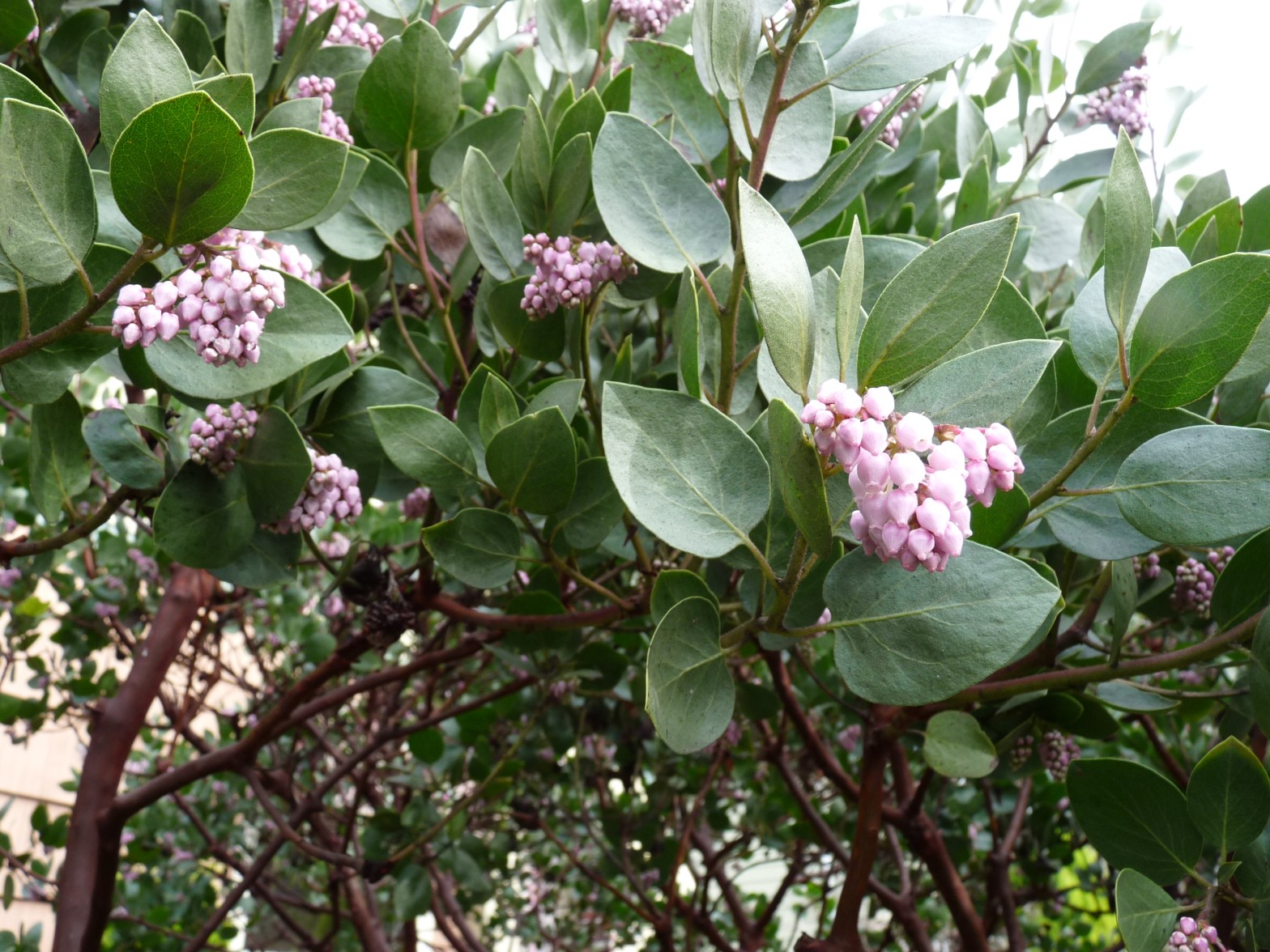
Native plants which are very climate resilient. They evolved here through time. One native plant that I love is manzanita. Site it in a sunny well-drained location and walk away. It is a bee and bird magnet.

Landscaping for Aging in Place

As we age, we question if we are going to be able to take care of our homes and gardens. Gardens are not one-size-fits-all and just because we are becoming oldsters doesn’t mean we are necessarily infirm and unable to maintain and enjoy our gardens. It becomes a question of what is the level of comfort, IE, can we bend over? Will our hands be able to prune? Can we climb the steps safely? Every body is different.

Lawn, or the sacred grass as I call it, can be burdensome to the body and the finances. Paying someone for weekly lawn maintenance can be expensive, noisy and polluting. My mother was mowing her lawn with a push-mower at age 85, but she was not your typical oldster. I suggest having a little flat lawn or no lawn at all. There are many easy care shrubs and groundcovers that can replace a lawn and create habitat. Personally, I would rather bird-watch than mow a lawn.

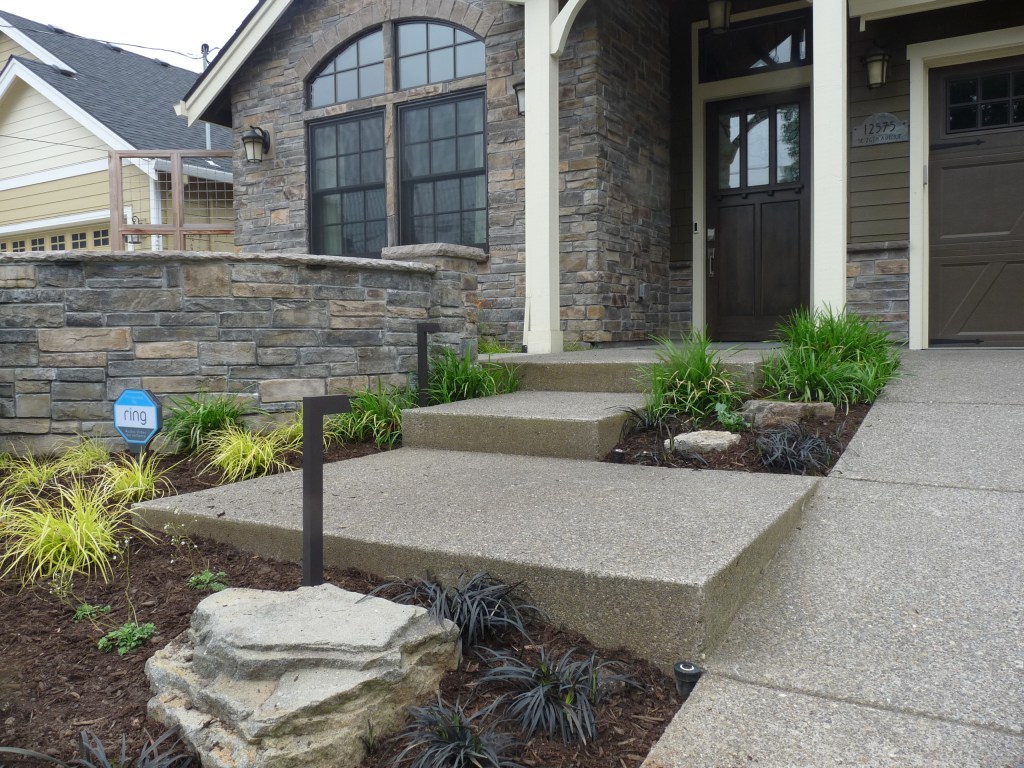
Safe passage is important with easy to maneuver pathways and steps. All steps should have exactly the same rise so that you can safely anticipate your next step. Railings can be helpful and may be required. When replacing driveways, steps and entries think about access in case of a future impediment or disability.

The addition of places to sit and rest can offer a change of view. Chose both sunny and shady locations and most of all, consider the view. Perhaps site fragrant plants nearby.

Raised beds should be high and wide enough to sit on while planting seed or harvesting vegetables. Plantings should be easy care and not grow out of bounds, meaning the right plant is in the right place. Have fewer high maintenance perennials and more blooming shrubs. Views from your windows should be taken into consideration with a focus on winter interest.

Landscaping with security in mind is important. There should be a clear view of all entries to your home, especially the front door. Shrubs should not block windows. There should be gates on both sides of your home for accessibility and fire safety.

If needed, a professional gardener 2 to 4 times a year may be helpful and you can garden with them and make a new friend.

No Lawn and Raised Bed
Safe Steps and Ramped Entry

Raised Beds
Places to Sit

Landscape Designers

Landscape Designer Tips

Landscape Designers create plans that will assist you in installing a landscape yourself or with a licensed landscape contractor. A drawn-to-scale plan allows you to obtain a realistic budget, materials, plant choices and the logistics and phasing of how to work and create your new outdoor spaces. Independent landscape designers work with a variety of contractors and vendors but what they sell is the design, the actual plan. That way you can get several bids for the work that needs to be done and choose a contractor that best fits your needs.

The Lawn-Less Yard

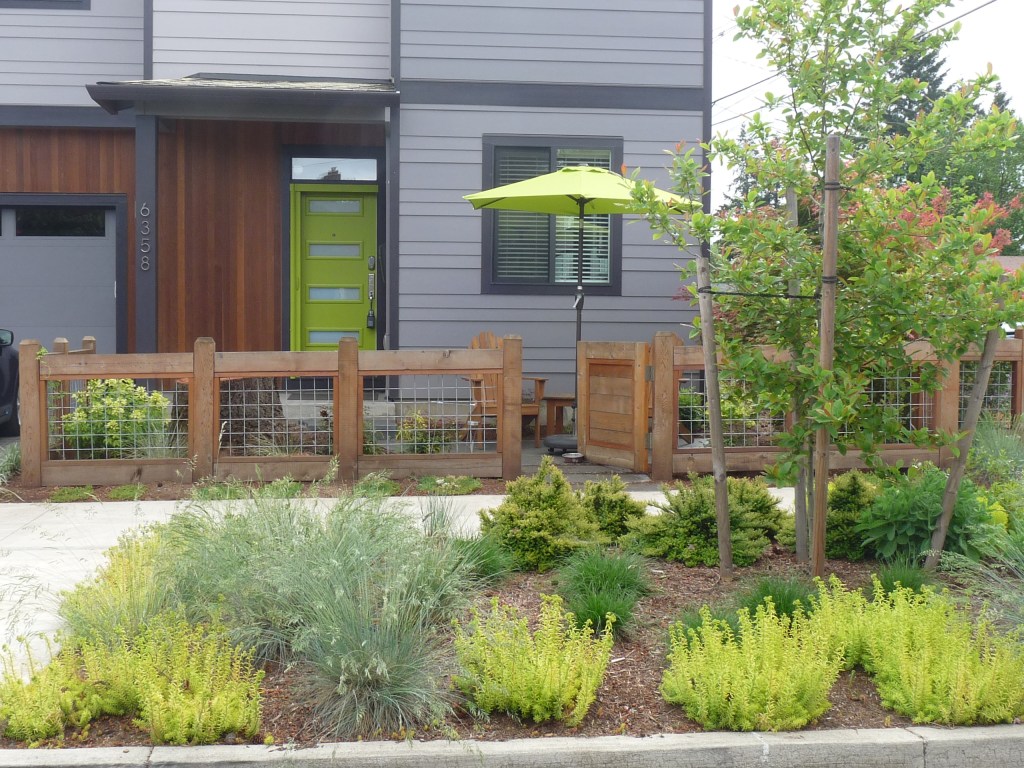
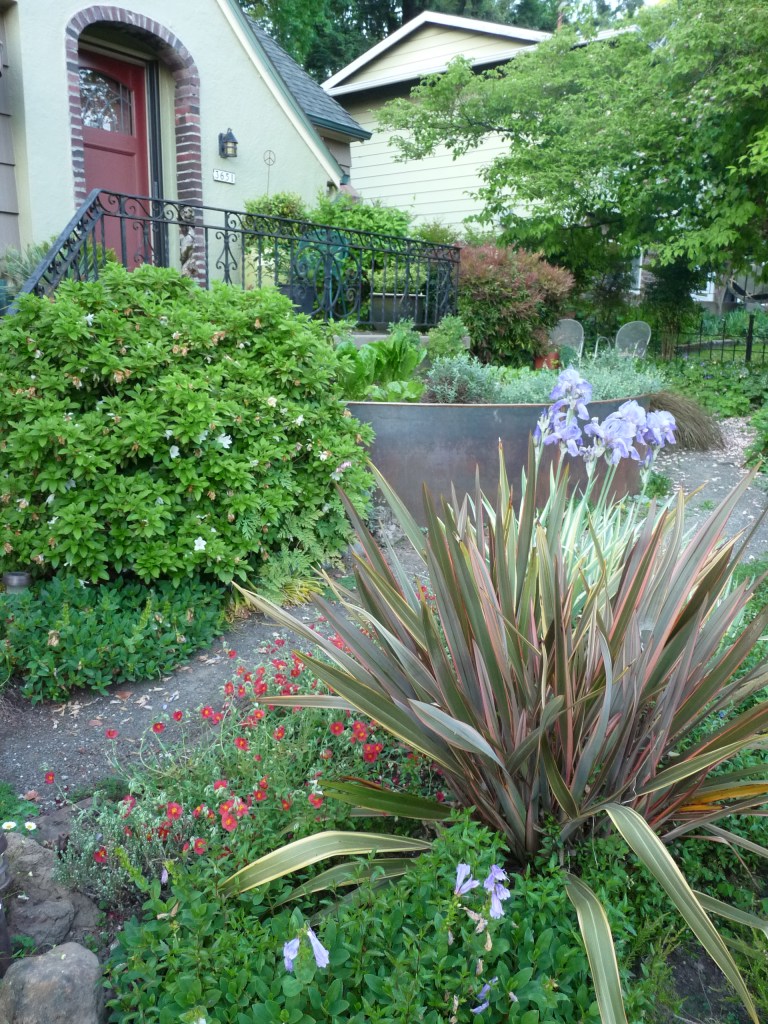
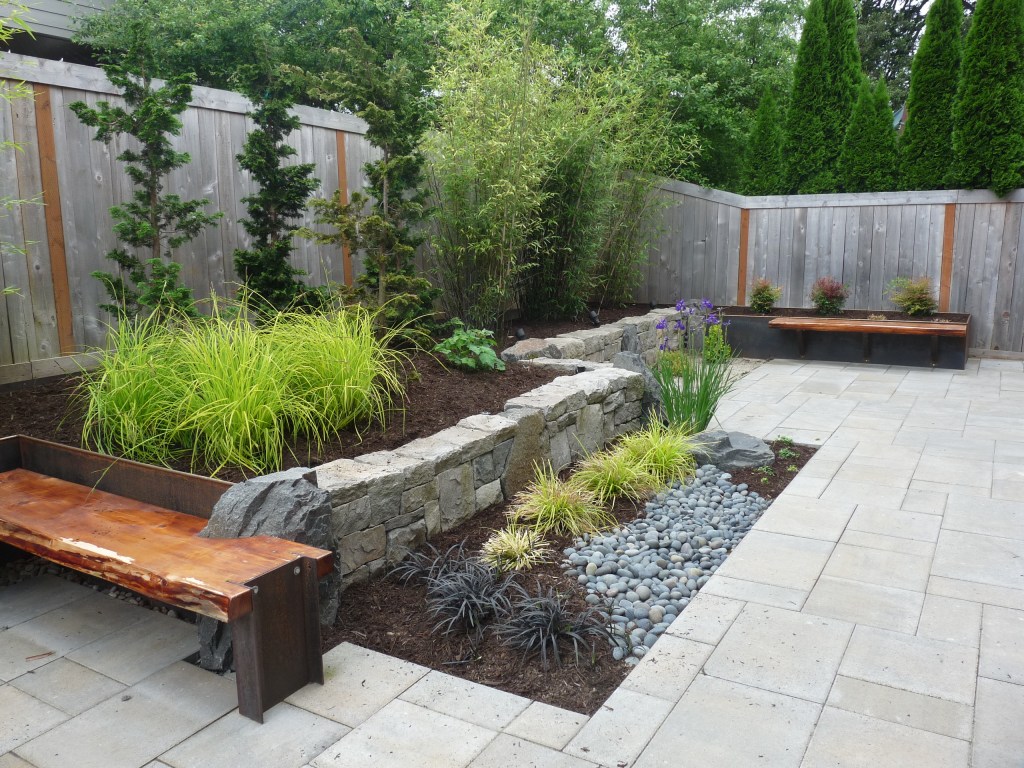
Creating a lawn-free garden can be a challenge. Turf grass lawns are nice for kids to play on, but they are not always necessary for play. Especially if there is a park, woodland or schoolyard nearby. Lawn maintenance is constant whether you are paying for a lawn service of doing your own mowing. In the growing season mowing is required weekly. If the lawn has been rained on, mowing can create a muddy mess. Turf grass will struggle and thin due to a lack of sun and/or poor draining. In some situations it never looks good no matter what you do. These photos of gardens devoid of lawn may provide some insights for alternatives to the standard turf.

Drought Tolerant Plants for Portland, Oregon

Contrary to local garden geek beliefs (myself included), this year of unprecedented drought has brought to light that many plants thought to be drought tolerant, are certainly not. This includes Hebe, Crocosmia (Montbrecia), Rudbekia (black-eyed Susan) and Echinacea (purple coneflower).

I have composed my own drought tolerant list based on my observations in established gardens this year. They are listed according to drought tolerance in the sun or shade.

2015 Extreme Drought Tolerance List

Shrubs and Trees for Sun

Acer griseum-paper-bark maple
Acer rubrum-red maple
Arbutus unedo ‘Compacts’-dwarf strawberry tree
Actostaphyllos varieties and natives-manzanita
Carpenteria californica-Sierra bush anemone (native to Calif)
Ceanothus thrysiflorus-California lilac (native to Southern Oregon & Calif)
Cistus purpurea and other varieties-rockrose
Cotinus coggygria varieties-smoke tree
Cupressus-Some cypress
Juniperus-juniper
Lagerstromeria indica-crepe myrtle
Lavendula varieties-lavender, English & Spanish
Lonicera varieties-Honeysuckle shrub & vine
Nandina varieties, especially ‘Sienna Sunrise’, ‘Moyer’s Red’ & ‘Plum Passion’.
Rosemarinus varieties-rosemary
Roses-shrub and rambler
Senecio greyi varieties-ragwort

Perennials for Sun

Achillea varieties-yarrow varieties
Aescelpis-native milkweed varieties, butterfly weed
Artemesia varieties-wormwood
Erisimum linefolium varieties-wallflower
Helianthemum-rockrose
Kniphofia varieties-red-hot poker
Penstemon rupicola-rockery penstemon
Salvia varieties-hardy salvia or sage varieties
Santolina varieties-lavender cotton
Sedum varieties-stonecrop  and of coarse,  Yucca varieties

Shrubs and Trees for Shade

Camellia japonica & sasanqua
Choysia varieties-Mexican orange ‘Sundance’ & ‘Aztec Pearl’
Elaeanagus varieties-silverberry, Russian olive
Leucothoe varieties-drooping & Sierra
Lonicera varieties-shrubs
Mahonia varieties-Native Oregon grape and others
Ribes sanguineum-red flowering currant (native)
Sarcococca varieties-sweet box
Thuja plicata-Western red cedar (native)
Vaccinium ovatum-evergreen huckleberry (native)

Ferns, Groundcovers, Perennials and Sedges for Shade

Carex oshimensis ‘Evergold’-’Evergold’ variegated Japanese sedge
Dryopteris seteferum-Alaska fern
Epimedium varieties-barrenwort
Oxalis oreganum-native shamrock plant
Polystichum minutum-western sword fern (native)

Plant Densely, Tread Softly

Bark dust is not a groundcover. It is a type of mulch. Its purpose is to deter weeds and reduce evaporation. It is temporary until new plants cover the soil. Groundcover plants eventually knit and cover the bare earth holding moisture for themselves and the planting layers above them.


Layered and dense plantings provide habitat, visual interest and shade. If you prefer a more sparse planting arrangement keep it simple with 2 or 3 shrub varieties, well spaced, but with a dense groundcover. Dense plantings are beneficial to the soil, their roots breaking up clay and encouraging beneficial microbial activity in the soil.


Just as medical science has uncovered the good bacteria in our bodies, soil scientists have discovered wondrous activity underfoot. Soil mycorrhiza is a fungus that has a symbiotic relationship with plant roots-it is an important part of soil and plant life. A soil wasteland of bark dust with little in the way of plant life is basically dead soil especially if it has been tilled, scraped or re-graded. Tilling exposes soil mycorrhiza to air and heat destroying the soil’s microbial life.


It can take years to renew damaged soil but it can be done with the proper compost and plants. Letting leaves lie can help build better soil. Ground beetles and sow bugs feed on dead leaves breaking them down into smaller particles that enrich the soil. Salamanders can slink unseen under damp leaves. Fallen leaves provide cover for nesting bumblebees.
As with the vast unknown under our oceans and in our heavens, beneath our feet there is a whole other world.

Readings:

‘The Soil Will Save Us” by Kristin Ohlson

“The Know Maintenance Perennial Garden” by Roy Diblik

Winter Flowers in the Pacific Northwest

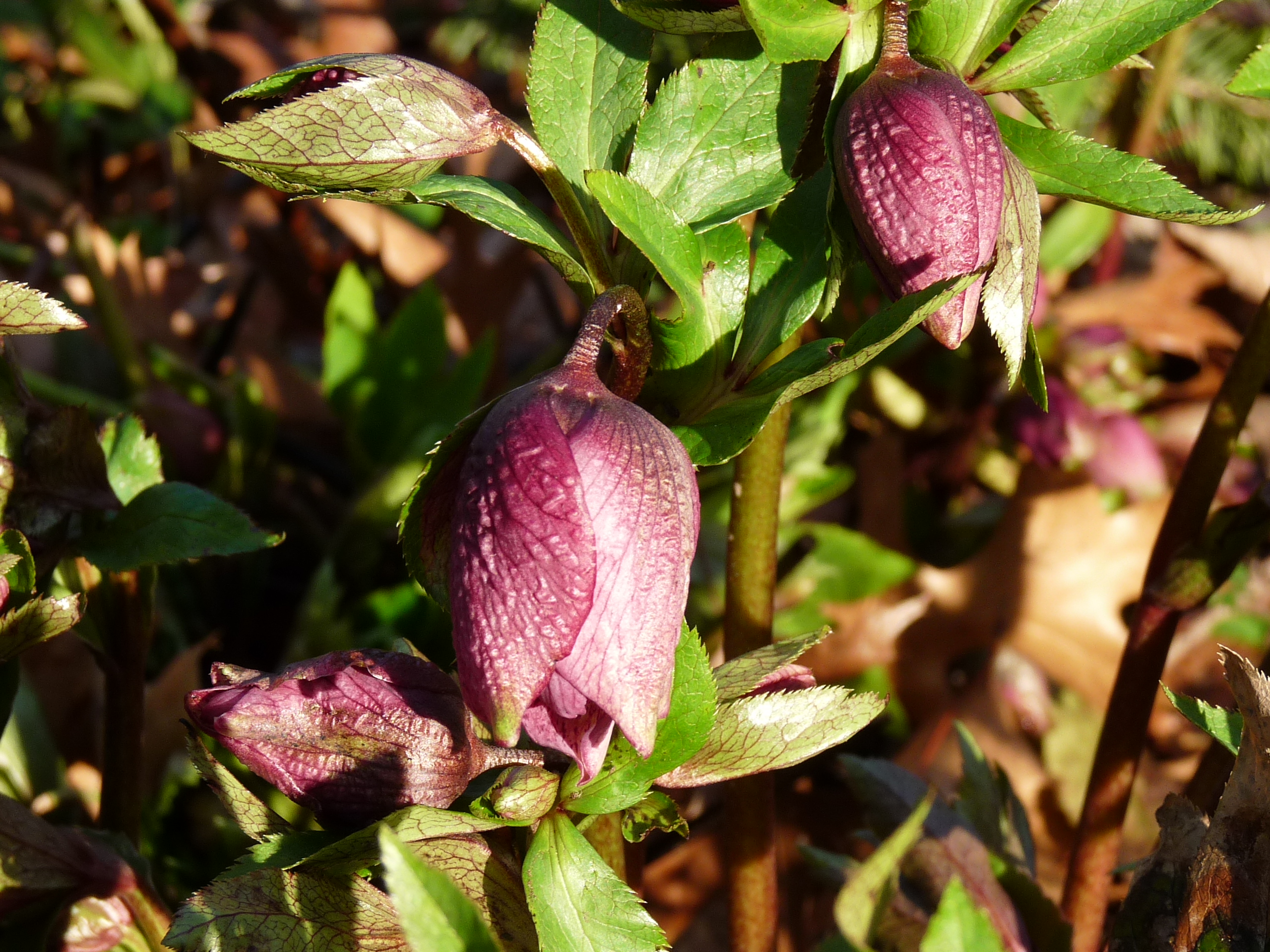
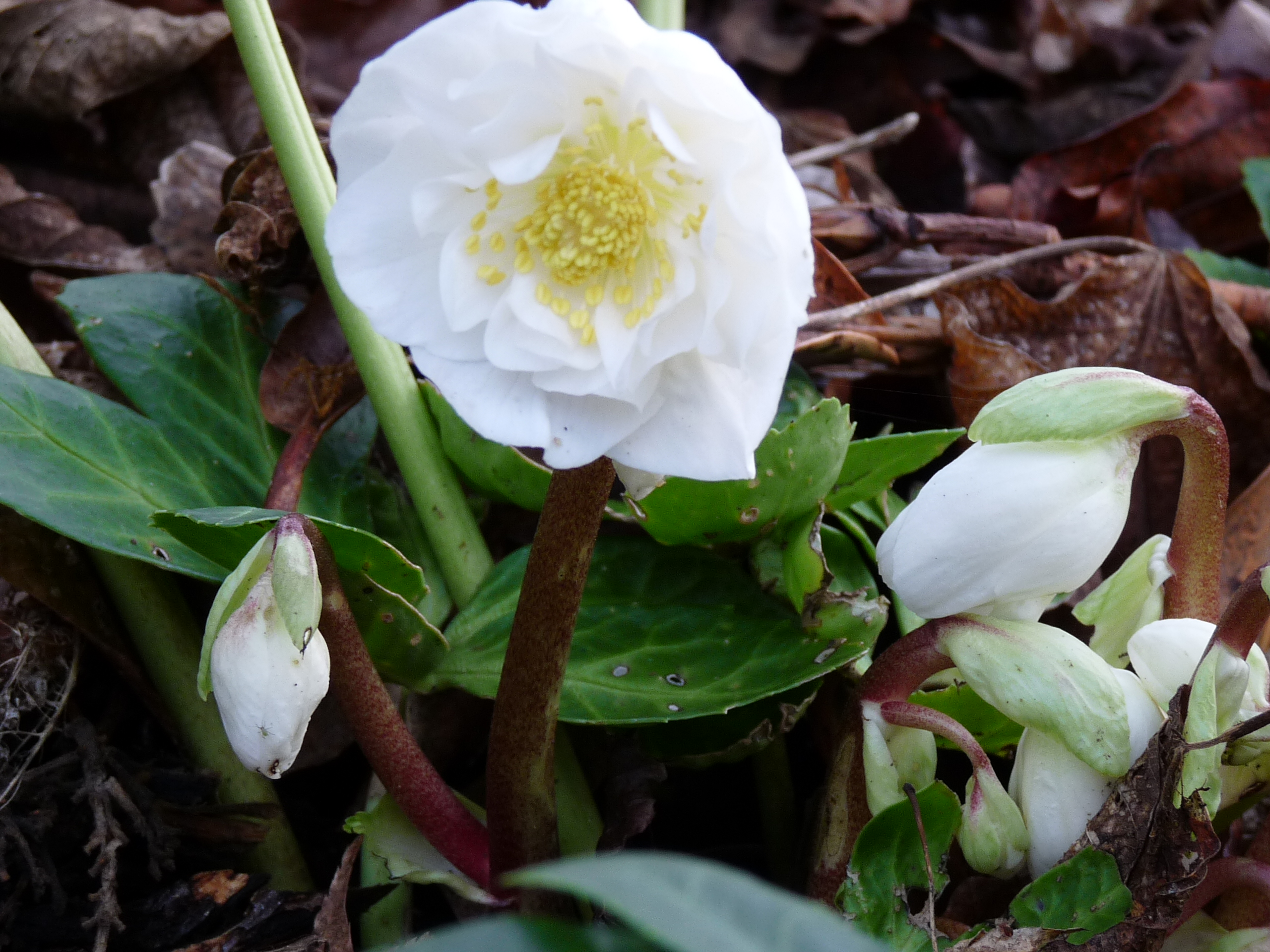
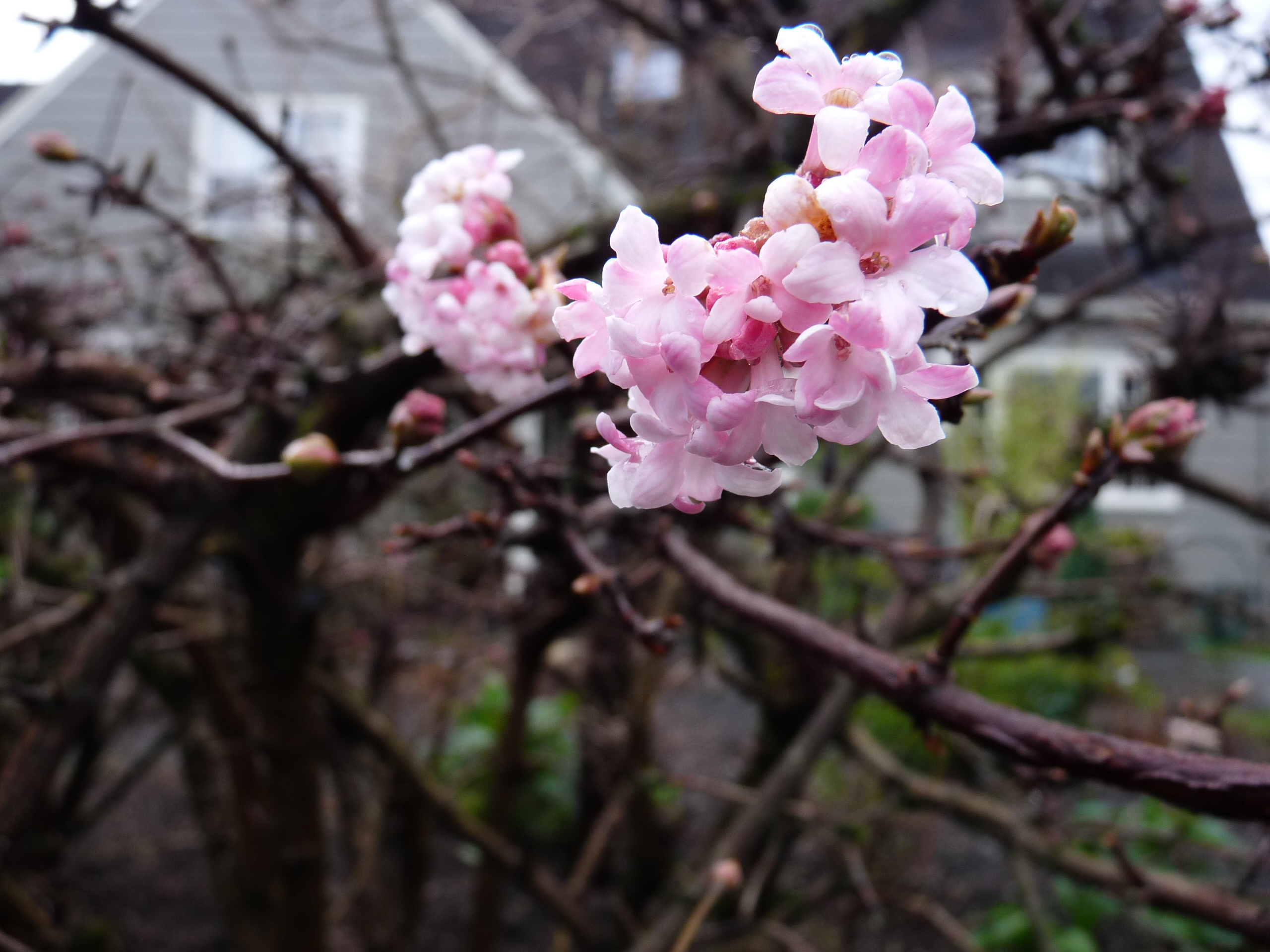
In so many areas of the country, particularly in the North, Winter can be dreary in the garden. Interest is derived from twiggy and grassy texture, colored dogwood twigs, foliage variations, berries and the lovely peeling bark of some trees. Here in the Pacific Northwest we do have plants that bloom in the winter. Our winters are soggy and wet but they are usually mild in temperature.  Many of us tend to ignore our gardens in the Winter. Add a winter- blooming plant on the path  where you travel to your door or outside your windows. Many of these plants attract  winter migrating hummingbirds at a time when they need nectar the most. On warmer days the hibernating bees will wake up to gather pollen. But don’t be fooled with the birds and the bees. We have a way to go until Spring.

Fall Color in the Pacific Northwest

Fall color can vary depending on the weather and where you live. Trees that are stressed may color-up early just from the lack of water. This year in the Pacific Northwest the autumn foliage is pretty astonishing. We typically show a lot of yellow foliage but this fall, after a very warm summer, there is an abundance of reds!

In addition to foliage color there are many plants that bloom in the fall, providing late pollen for bees and nectar for hummingbirds.

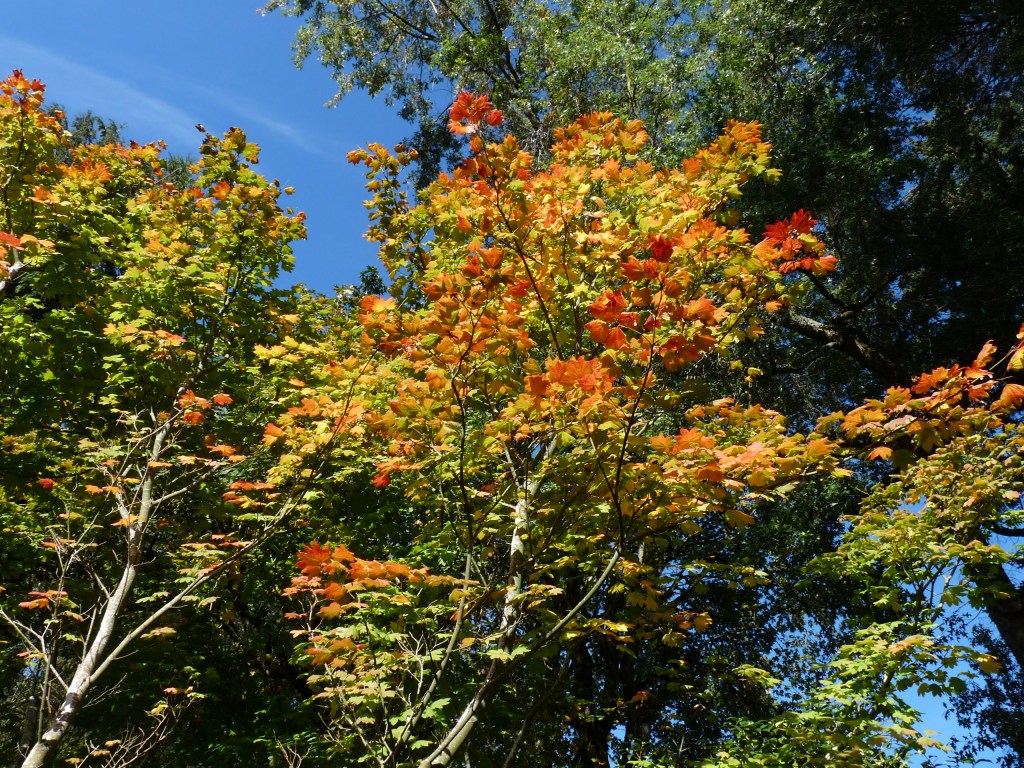
Our native vine maple offers a variety of fall color.

Japanese false camellia tree, (Stewartia pseodocamellia ), is known for its autumn color, exfoliating bark and white flowers in spring. This tree has it all and it is small and not prone to damage from wind or snow.

Red maple (Acer rubrum) is the tree that contributes the greatest to New England’s famous fall color. This tree is tough and takes both wet and drought. It is no longer on the City street tree list due to its popularity. By diversifying our street tree plantings we can prevent disease from spreading.

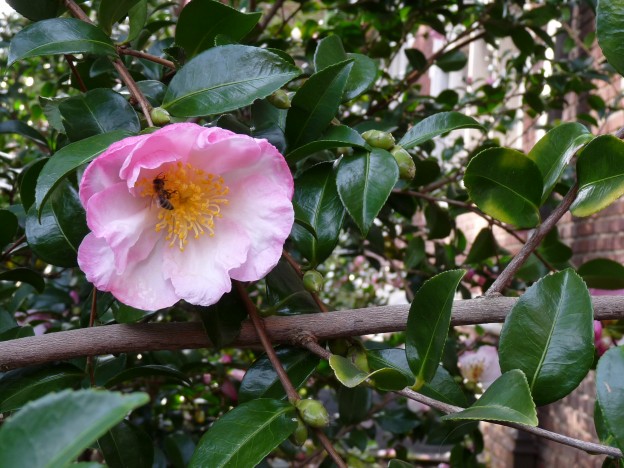
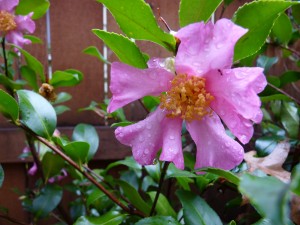
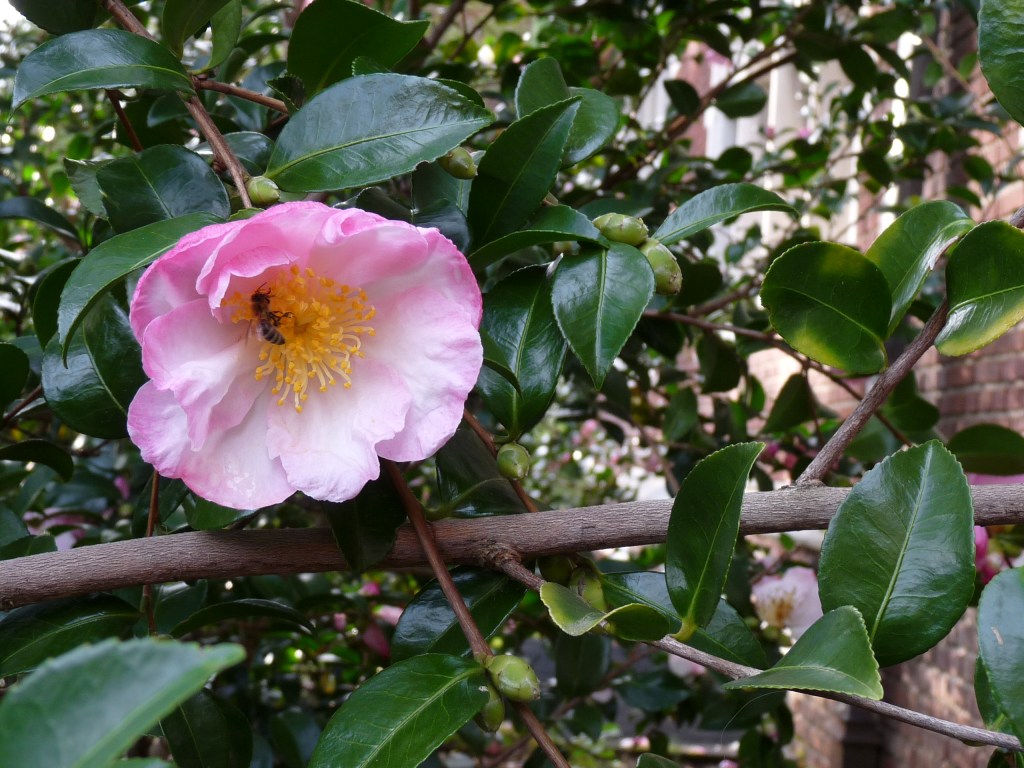
Camellia sasanqua ‘Apple Blossom’ blooms from fall into winter and provides late pollen that bees need for wintering over. It also attracts hummingbirds, even with a light dusting of snow!

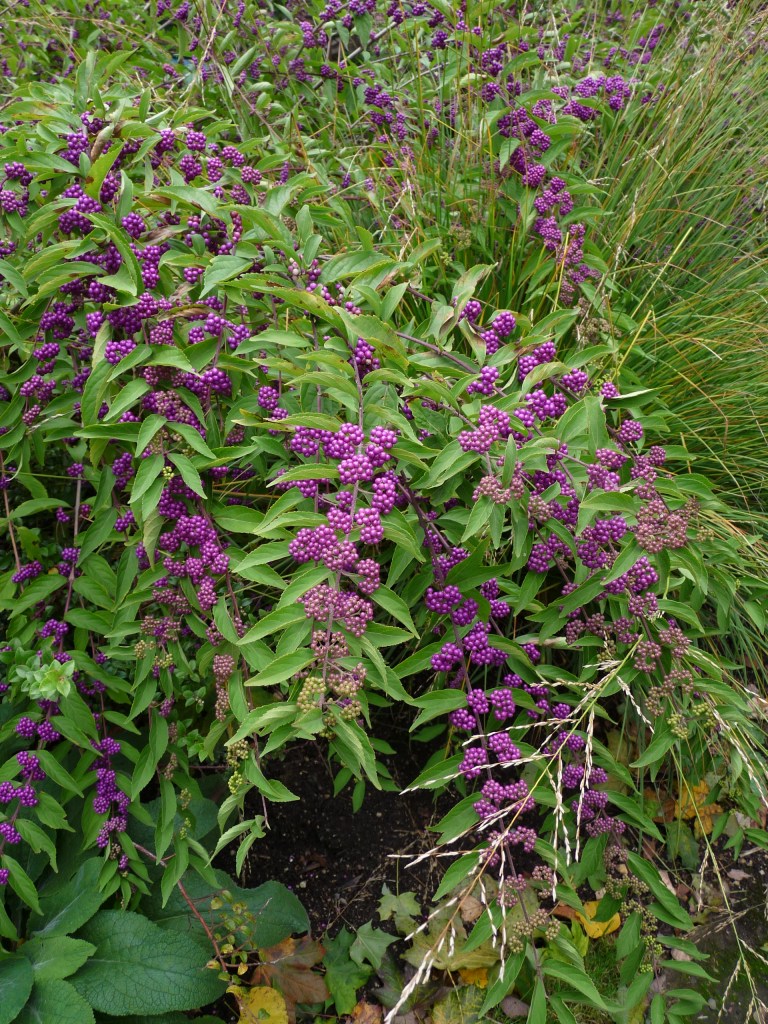
Beauty berry (Calicarpa b. ‘Profusion’) berries provide a color that is seldom seen in the fall.

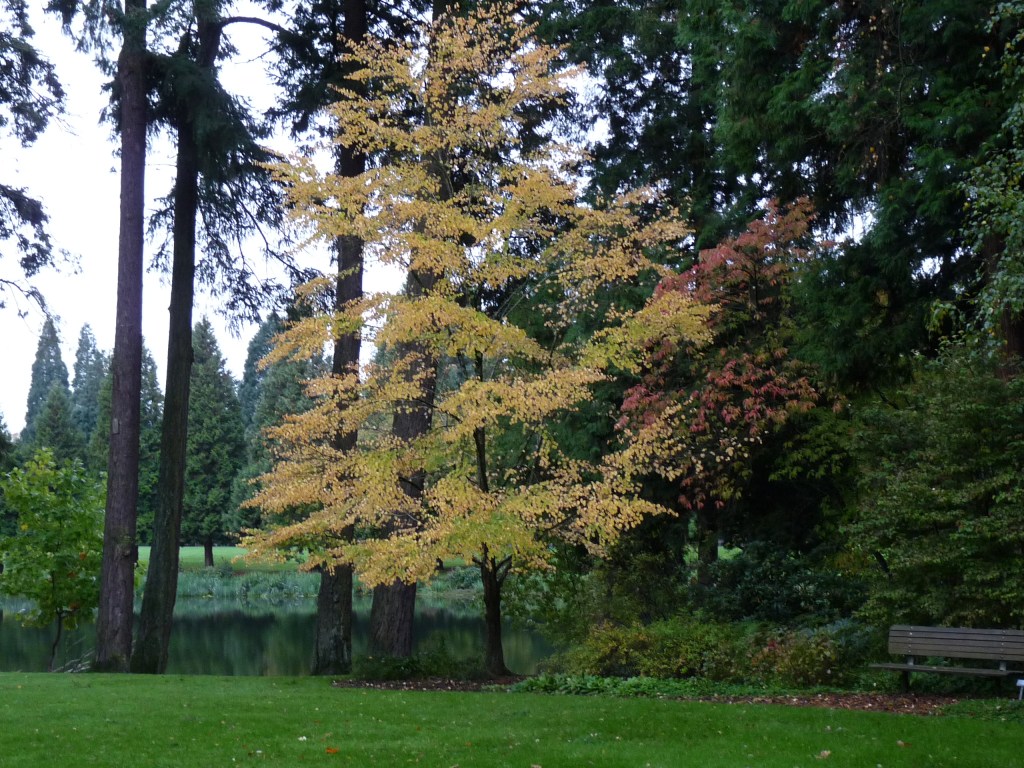
The soft yellow foliage of this Japanese katsura tree (cercydiphyllum japonicum)stands out against an evergreen background and the red of a sourwood tree (Oxydendrum arboreum).

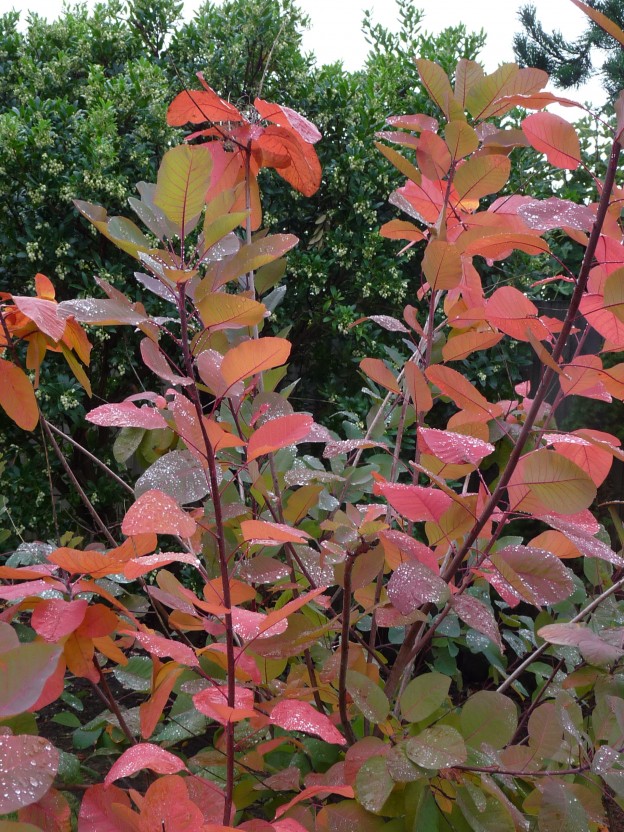
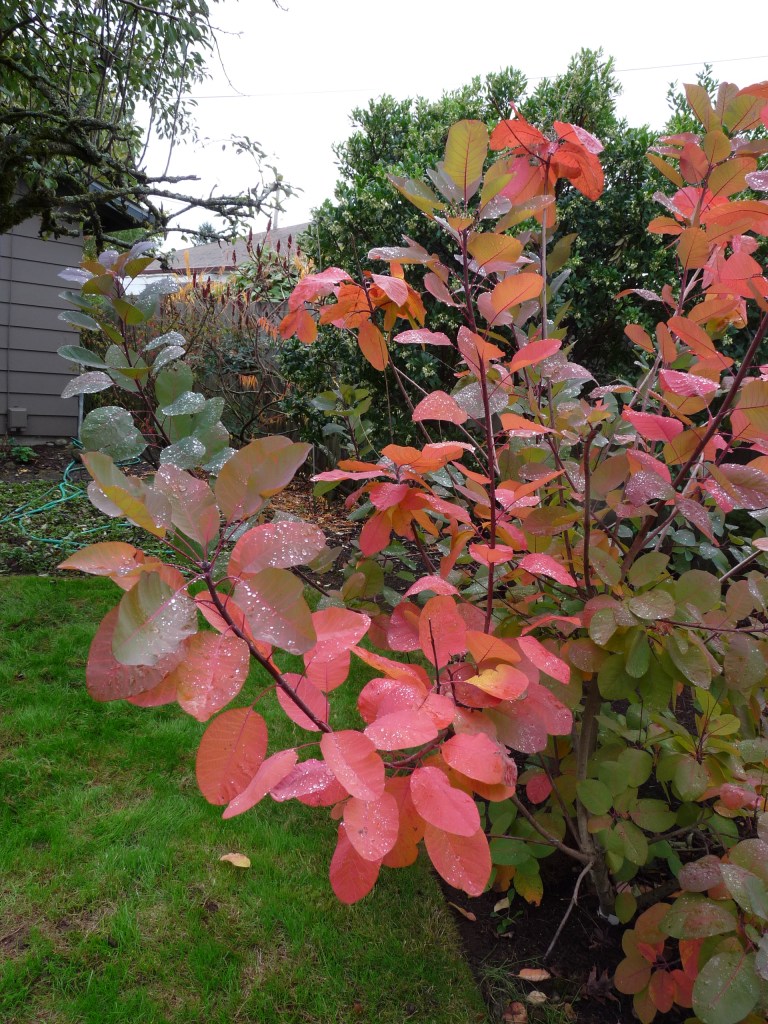
One of the very best large shrubs for fall color is the smoke tree ‘Grace’ (cotinus coggygria ‘Grace’). They are almost a coral color.

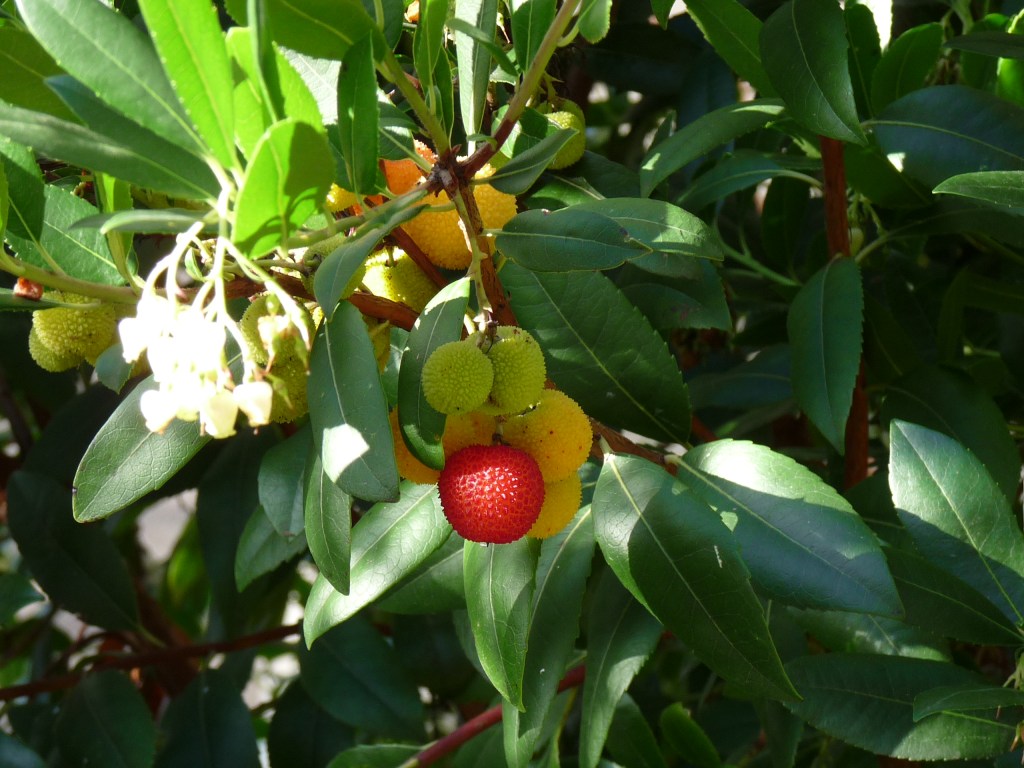
The dwarf strawberry tree (Arbutus unedo ‘Compacta’) has both fruit for birds and other critters and flowers for hummingbirds.

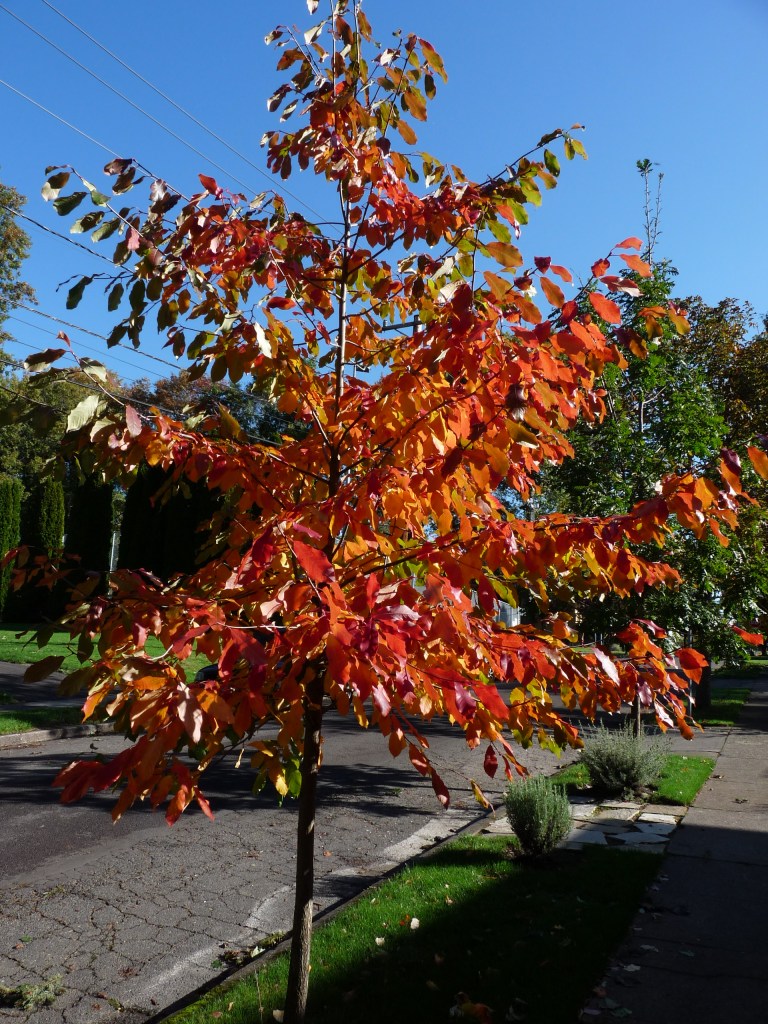
Nyssa sylvatica, the Tupelo Tree has some of the best fall color of any tree.

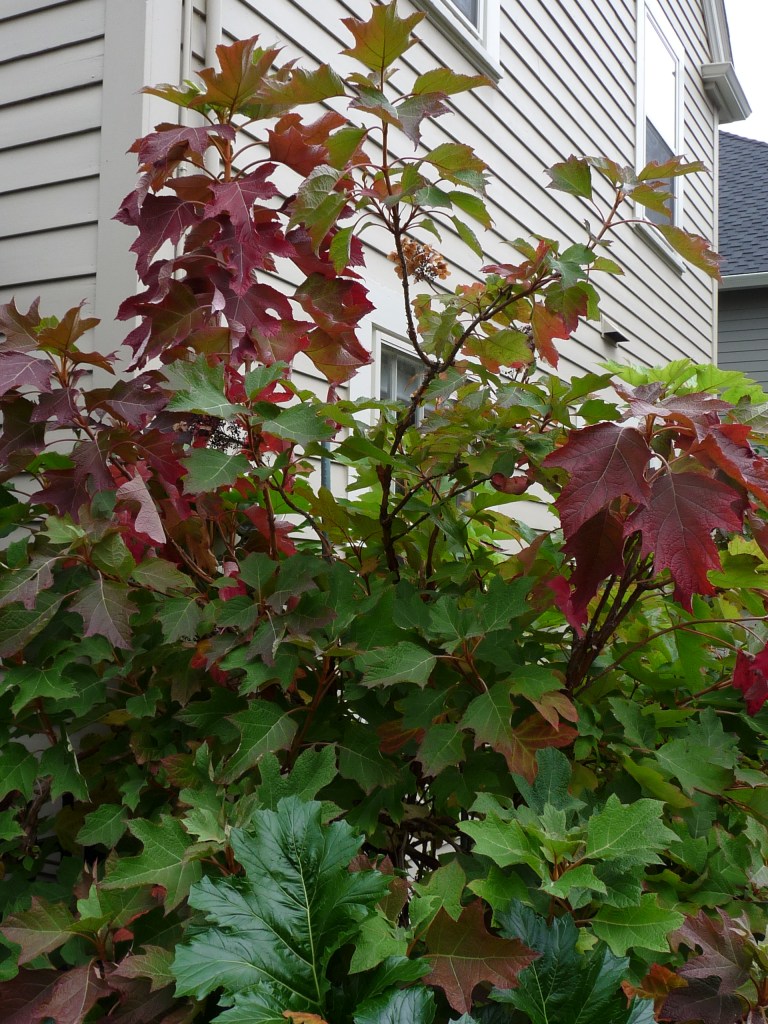
Oak leaf hydranga (a very large shrub) can have fall color ranging from red to plum.

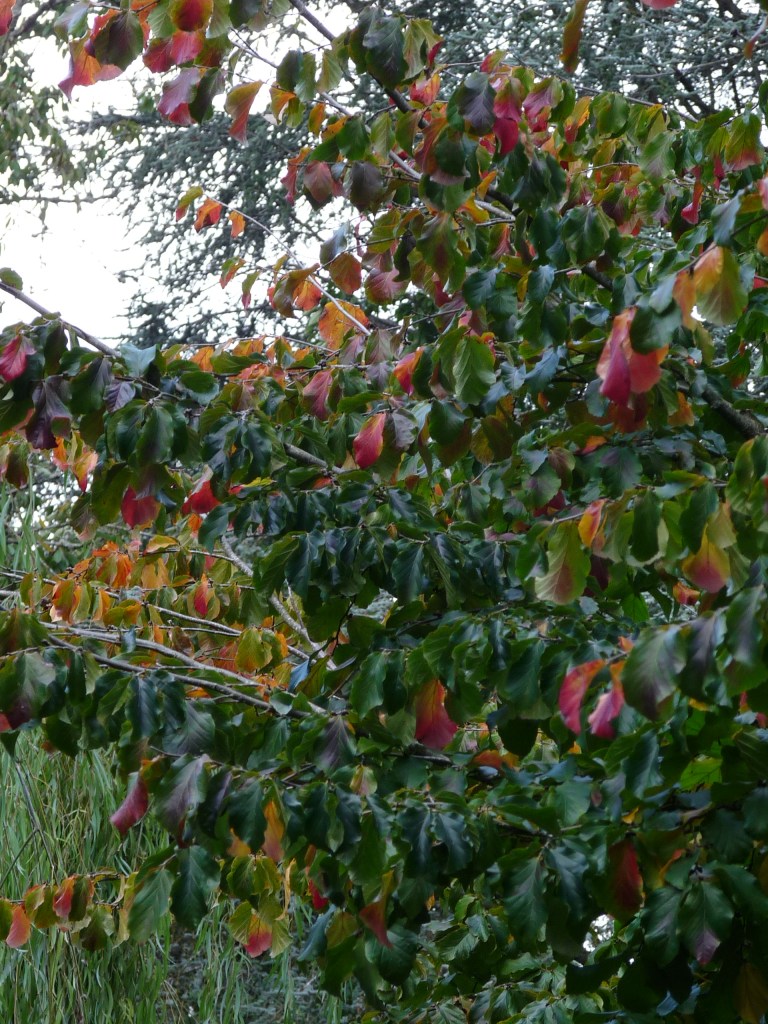
This Persian ironwood tree is just starting to turn. It is known to be the most reliable fall color, whatever the weather.